
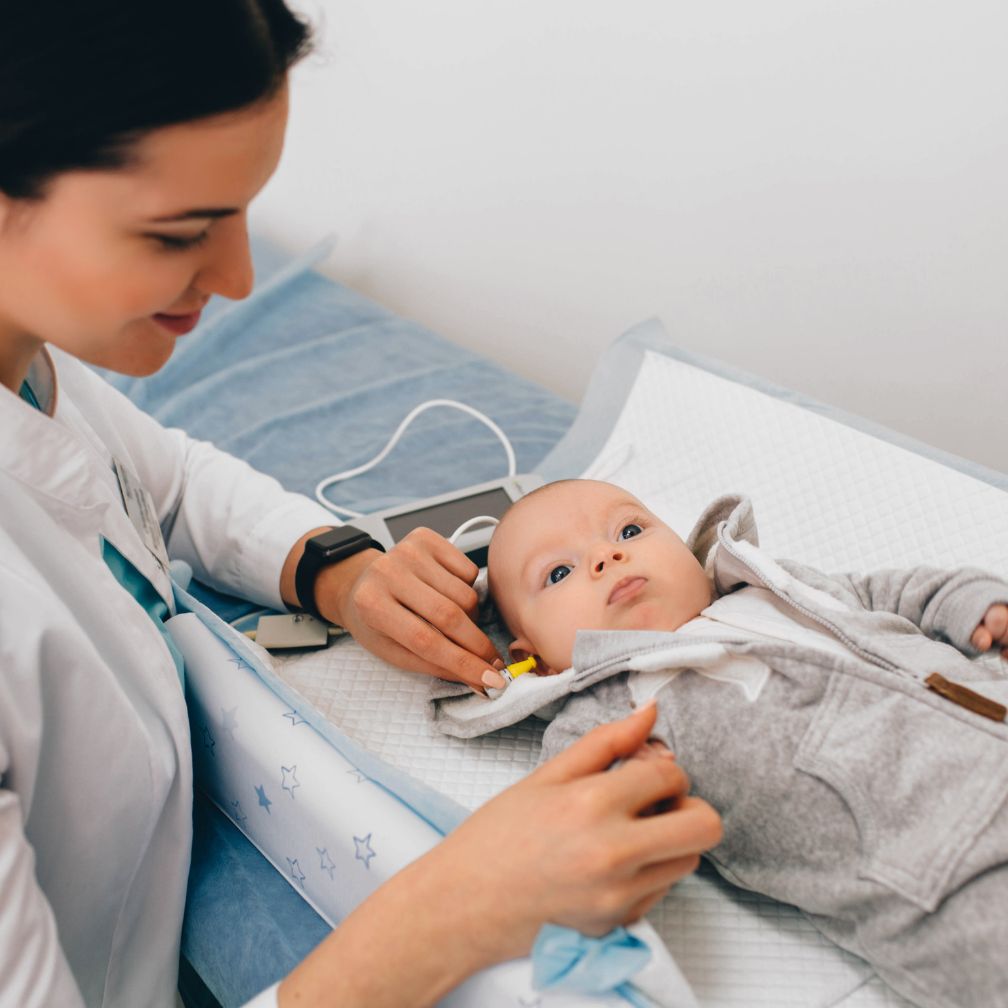
For brand-new parents, learning that a child presents a hearing difficulty can prove extremely emotionally overwhelming. Fortunately, the reassuring perspective dictates that through timely checks and early help, babies with hearing issues can realize remarkable achievements. Unquestionably, such infants can develop speech patterns, relational abilities, and robust connections with their society, realizing a wonderful life!
Deploying specialized hearing aids alongside advanced cochlear devices represents two premier clinical instruments for assisting infants with hearing deficits. Inside this overview, we outline their working mechanisms to guide you in choosing the best pathway for your infant.
Demystifying Hearing Deficits in Newborns
Hearing deficits among babies frequently result from multiple medical influences, including:
- Targeted genetic mutations (even across households showing zero history of impairment)
- Early prenatal viral exposures such as cytomegalovirus (CMV) or rubella pathogens
- Significant obstetric complications, including systemic oxygen lack or low birth weight
- Particular pharmaceutical treatments utilized inside neonatal intensive units
What stands as the primary clinical priority? Early medical diagnosis. Consequently, newborns within United States birth units undergo auditory screening prior to hospital discharge. Respected pediatric hearing experts actively deploy the industry-standard “1-3-6” target timetable:
- Initial screening completed before 1 month of age
- Confirmed hearing diagnosis confirmed by 3 months of age
- Formal intervention (deploying corrective equipment or speech habilitation) launched prior to 6 months of age
Achieving these diagnostic benchmarks provides babies the optimal foundation for robust speech, linguistic, and neurological growth. When you need advice concerning these newborn checks, your family pediatrician will gladly offer support!
Pediatric Hearing Aids for Young Babies
In infants identified with mild to severe auditory loss, modern hearing aids frequently serve as the primary clinical remedy. These small, specialized devices amplify surrounding audio, allowing infants to hear human speech and background noise much more clearly.
Infant-adapted hearing aids function as:
- Fully safe and comfortable for young infants only a few weeks after delivery
- Crafted with cushioned, comfortable ear molds that are replaced as the baby grows
- Outfitted with locking battery compartments plus specialized safety features geared toward babies
- Uniquely tuned by a pediatric audiology specialist to accommodate your child’s specific hearing levels
While your infant develops, hearing instruments necessitate frequent maintenance to preserve physical comfort and functional efficacy.
Pediatric Cochlear Implants: An Advanced Solution
If an infant is diagnosed with severe to profound sensorineural hearing loss that shows insufficient improvement with standard hearing aids, a surgical cochlear implant might be advised. Unlike hearing aids, cochlear technology:
- Must be surgically installed within the inner ear
- Routinely bypass non-functioning sensory hair cells of the inner ear system
- Transform acoustic energy into electrical impulses that stimulate the auditory nerve directly
State-of-the-art cochlear systems function as:
- Fully cleared by the FDA for young children as young as 9-12 months
- Uniquely successful when supported by early speech therapy and strong household backing
- Prescribed solely following a comprehensive diagnostic assessment by a certified audiologist and otolaryngologist
That multi-step journey involves high-resolution imaging, objective hearing assessments, and setting realistic expectations for future communicative success.
Comparing Hearing Aids and Cochlear Implants: Key Differences
- Mild to severe hearing loss: Hearing Aids; Severe to profound hearing impairment calls for Cochlear Implants
- Non-Invasive wearable application: Hearing Aids; Surgical internal implantation: Cochlear Implants
- Standard sound amplification logic: Hearing Aids; Direct conversion to electrical signals: Cochlear Implants
- Application starts during early infancy: Hearing Aids; Placement starts at 9-12 months: Cochlear Implants
Final Conclusions: Selecting the Right Path for Your Infant
When your child is diagnosed with auditory deficits, you can rely on excellent technological options alongside extensive professional backing. Under the care of specialized pediatric hearing doctors, most children construct speech and language milestones fully matching their playmates.
Whether your youngster qualifies for external hearing aids or surgical cochlear implants, early management establishes a foundation for lifelong communicative success.
Do you need professional advice regarding your baby’s current hearing health? Connect with our office today to receive a complete diagnostic assessment and personalized rehabilitation plan.