
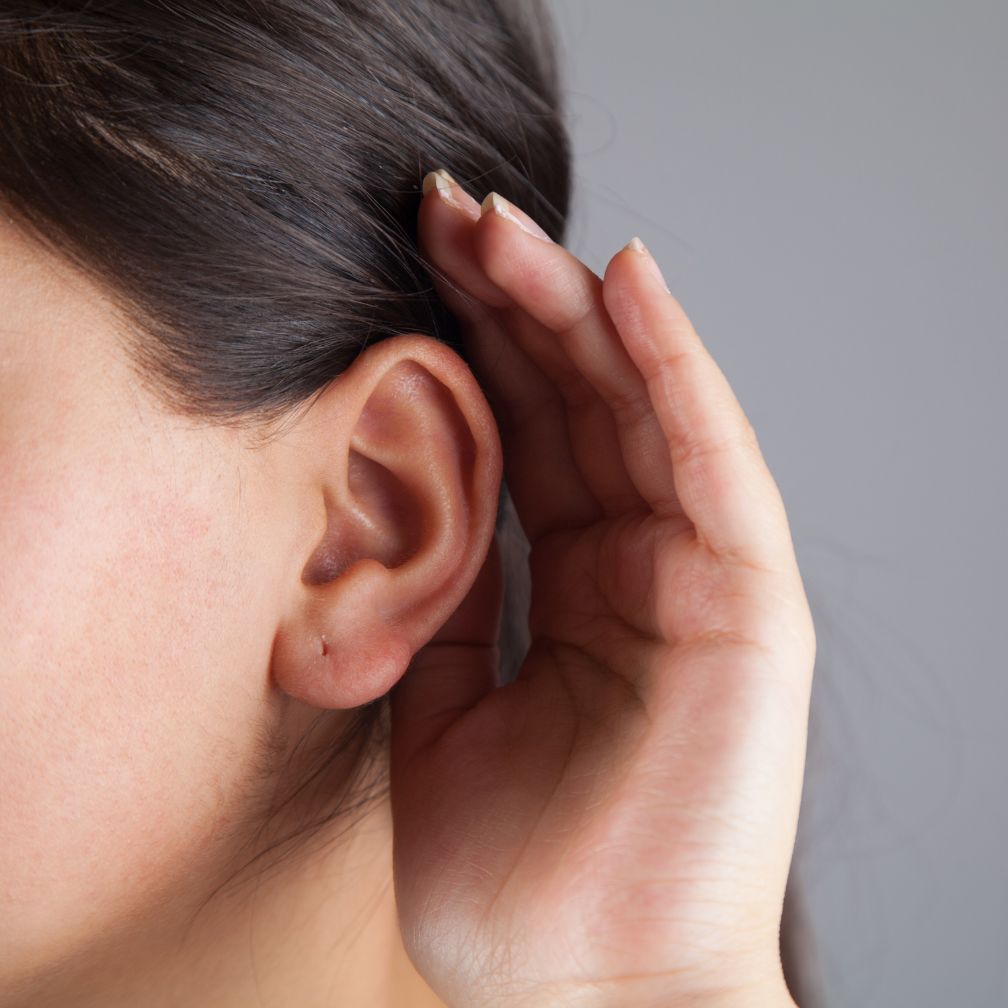
What’s that strange noise that kind of sounds like white noise, or wind in your ears? Why does this sound remain entirely imperceptible to the people around you? This localized head noise is a genuine physiological event, not a trick of the mind.
Fortunately, it’s probably not “phantom ring syndrome,” a condition where people who use cell phones excessively think they hear their phone ring, buzz, or beep when no one’s calling or texting them.
Instead, these persistent acoustic distortions are classic indicators of clinical tinnitus. To be perfectly clear, the frequency you are tracking is completely real, and specific environmental factors can actively exacerbate your tinnitus.
Fortunately, this underlying audio threshold rarely blocks your baseline ability to follow spoken dialogue. Rather, it simply feels as though an unwanted layer of acoustic static has been artificially superimposed over your entire auditory field.
Let’s look at where this white noise comes from, what it is, and what you may be able to do to reduce or get rid of it.
What is tinnitus & why do I hear this white noise in my head?
In the vast majority of medical cases, this persistent internal static is a secondary symptom of sensorineural hearing loss. It is uniquely defined by a steady or variable acoustic signal that registers on top of everyday conversations. Depending on individual pathology, this subjective sound can remain mild enough to ignore during active hours. For others, however, the unremitting hum inside their skull feels utterly deafening, causing massive psychological distress and exhausting their patience.
You have likely attempted to describe this exhausting sensory distortion to friends, but this particular manifestation of hearing loss is incredibly abstract to those with normal hearing.
It can feel deeply disorienting to process an intense internal buzz that leaves absolutely no measurable trace in the physical room. Is it a hallucination? How can it keep me from understanding those around me? Or sleeping?
The Quiet Room Trap: How Inactivity Highlights Internal Buzzing
You have likely observed that as your immediate surroundings become increasingly silent, your perception of the tinnitus scales up dramatically. This occurs because the phantom signal inside your pathways no longer encounters any external acoustic competition; for instance, the average adult maintains absolute silence in their bedroom during sleep hours. They operate without a television background feed, avoid running any radio streams, and eliminate all ambient audio. Add to that the fact that you’re probably alone with your thoughts during this time, and when you start to notice the buzzing or humming in your ears, it turns into the only thing you can think about, making the symptoms seem even worse. Whether your condition presents as a faint hiss or a booming roar, a quiet nocturnal space creates a sensory vacuum that allows tinnitus to fully take control of your mind.
When Tinnitus Mimics Wind, Static, and Alternative Acoustic Textures
Not only is tinnitus hard to explain to someone who doesn’t have it, but this condition can also become complicated when you try to talk to someone else who is suffering from tinnitus. They might describe a totally different frequency matrix or tonal texture, which easily leads you to conclude that your wind-like sound must be an entirely separate disease.
Yet, despite these tonal differences, your underlying diagnosis remains highly probable. The explanation is simple: this auditory deficit is incredibly diverse, crafting unique sensory experiences for each patient’s brain layout. Sufferers regularly document internal noises that encompass configurations such as:
- A continuous blanket of high-frequency digital static
- Humming
- An active, vibrating internal buzz resembling an electrical current
- Ringing
- Thumping
- A flat, continuous telephonic dial tone
Under standard clinical circumstances, you remain the exclusive audience for the subjective white noise generated by your neural pathway errors. Consequently, if you request that your family doctor physically verify the noise during an office visit, they lack the tools to do so. Instead, your regular physician must depend completely on your personal testimony to chart the condition.
Regrettably, this inability to physically verify the sound often causes individuals to feel isolated by a primary care provider who doesn’t specialize in permanent hearing loss.
To illustrate, an industrial steelworker named Thomas shared his story: “The moment that intense ringing initiated, I consulted my family physician. While the physician did agree that it matched the description of tinnitus, he completely underestimated how exhausting the background noise was to my mental health. He spoke about it like it wasn’t really there. He seemed to think I could just ignore it and really didn’t offer any solutions.”
Partnering with a true audiology specialist resolves this sense of isolation, providing you with targeted clinical paths and specialized relief protocols. Frequently, the unique behavior of the phantom frequency serves as an anatomical roadmap, helping your doctor identify the perfect treatment.
Whooshing vs. Ringing: Identifying High-Risk Vascular Anomalies
The diagnostic tracking process is made difficult by the reality that your internal head noises can take on completely unexpected mechanical characteristics. For instance, if your internal static takes the form of a mechanical whooshing or rhythmic throbbing that mirrors the exact timing of your physical pulse, your diagnosis may be pulsatile tinnitus.
The reassuring reality is that this specific rhythmic variant is highly responsive to medical intervention, as it is generally driven by treatable vascular conditions like high blood pressure or arterial blockages.
This distinct vascular whooshing can stem from turbulent blood flow forcing its way through constricted cranial vessels, a physical phenomenon clinically identified as a bruit. It’s critically important to get this checked out and treated, as in rare cases, the whooshing sound could be a sign that you’re heading for a seizure or stroke, either of which could prove fatal.
The Auditory Reality of Pulsatile Symptoms: External Verification Options
The reality is undeniable: this persistent head noise is a legitimate, exhausting condition that severely impacts quality of life. Although regular ringing escapes external tracking, unique objective cases allow an ear specialist to leverage diagnostic listening tubes to physically capture the precise internal sound passing through your tissue. Keep in mind, however, that this physical verification is strictly limited to the pulsatile subtype, which represents a small fraction of overall global tinnitus diagnoses.
How did I get tinnitus? What caused this humming noise in my head?
In most clinical case histories, the principal cause behind this internal static is a history of sustained exposure to hazardous noise levels. This explains why the disorder is highly prevalent among professional musicians, concertgoers, and industrial laborers who operate within loud environments for consecutive hours over several years.
Several specific employment sectors generate high enough decibel baselines to directly induce permanent tinnitus, including:
- Manufacturing Plant Operations – Being exposed to unshielded mechanical noise for long shifts slowly degrades your internal hair cells over a long career timeline. In addition to the sheer sound exposure, the intense physical pacing of factory labor drives systemic stress, which directly exacerbates the severity of your internal head static. Sufferers who work in proximity to a pneumatic riveter are exposed to one of the worst acoustic offenders in the world, pumping out 125 decibels—loud enough to cause instantaneous hearing destruction and life-long tinnitus.}
- Modern Farming – Don’t blame it on the roosters. While those loud, early-risers clock in at around 90 decibels, there are many things on the farm that are much louder. Tractors, combines, cherry-pickers, milking machines… all of these farming implements make a lot of noise. Need to repair the fence? Even your table saw can pump out over 85 decibels, which is damaging over long periods of time.}
- Aviation – A commercial jet propulsion system generates a staggering 140 decibels of acoustic energy, even from a distance of a hundred feet. While professional aviators generally wear protective communication headsets, pilots of small or regional aircraft operate right next to the engine firewall. No passive or active headset is completely capable of shielding the inner ear from this intense, vibrating sound pressure, meaning your hard-earned flight hours are simultaneously causing gradual, permanent sensorineural damage.}
- Motorcycle Traffic Enforcement – You don’t need a badge to mount a motorcycle, but spending your entire working day atop a roaring engine exposes your ears to a toxic combination of motor exhaust and high-speed wind noise that induces chronic tinnitus. This identical sensory threat applies to operators of industrial snowmobiles and personal watercraft, though such vehicles are rarely part of a standard corporate job unless you work in an exceptionally adventurous field.}
- Hospitality Work – Fulfilling orders in a popular nightclub requires you to constantly separate human speech from an overwhelming background environment. The amplification systems in these establishments are routinely set to hazardous levels, forcing your ears to work in overdrive just to decode a simple sentence over the roar. Should your establishment regularly host live concerts or loud acoustic events, your ears are absorbing the exact same cellular damage that causes hearing loss in professional musicians.}
The common denominator in all these jobs is that the delicate sensory hair cells within the inner ear have been bent or broken by continuous sound pressure. These delicate cellular structures are responsible for converting physical sound vibrations into electrical signals that the brain can decode into meaningful language. Tragically, unlike your skin or bone tissue, these specialized sensory receptors lack the biological capacity to regenerate or repair themselves, leaving you with permanent deficits and a distorted auditory perspective.
What Is Driving the Volume Up? Secondary Tinnitus Accelerators
Beyond direct exposure to loud volumes, specific lifestyle choices and physiological conditions can cause the white noise in your head to worsen.
- Anxiety and Depression – Both of these emotional conditions establish a highly destructive psychosomatic cycle. As your daily anxiety or depressive symptoms flare up, your internal head static becomes significantly more intense, which naturally causes your mental health to deteriorate further.}
- Ignoring Your Body’s Warning Signs – Your ears possess natural defensive thresholds and experience physical discomfort when a room is too loud. Rather than simply enduring the painful volume, you must actively protect your auditory system, as these delicate cells cannot be replaced once destroyed.}
- High Blood Pressure – Unmanaged hypertension can cause severe micro-circulatory issues, starving your cochlear architecture of oxygenated blood. This fluid restriction causes an immediate surge in the loudness of your tinnitus and can compound your long-term hearing degradation if left untreated.}
- Smoking Habits – The chemical peaks and valleys experienced between cigarettes can cause your auditory symptoms to flare up dramatically. While lighting up seems to soothe the immediate stress, the long-term toxic payload and cardiovascular damage from smoking ensure that your tinnitus will continue to worsen over time.}
- Some foods – Some people find that caffeine and artificial sweeteners make tinnitus worse. Keep a food journal to track everything you eat, along with your tinnitus level, to find out which foods make your symptoms worse.}
- Some people – Being around certain people, especially people with a very negative outlook, can make tinnitus worse because it triggers high blood pressure, anxiety, and depression. Consider relationships that may be doing you more harm than good and decide if they’re important enough to risk your hearing and health. Remember, you can’t change other people, but you can choose to be around them less often.}
- Pregnancy – Approximately one-third of women experience localized ear ringing during gestation, a phenomenon routinely triggered by shifting endocrine baselines and increased cardiovascular demands.}
- Deep wax build-up – Earwax pressing on the eardrum can cause odd sounds. Having that wax removed professionally could instantly stop the ringing in some cases.}
- Ototoxic Pharmaceuticals – A wide array of medications, including specific opiates, broad-spectrum antibiotics, loop diuretics, chemotherapy regimens, and even common over-the-counter NSAID painkillers, carry documented ototoxic side effects. It is highly recommended that you consult both an audiologist and your primary physician to thoroughly evaluate your current drug profile for ear risks.}
Overcoming the Static: Proven Therapeutic Approaches for Tinnitus Relief
Your first step should always involve addressing any concurrent medical concerns with a primary care provider. Some conditions make tinnitus worse, like anxiety or high blood pressure.
After all primary medical and vascular variables have been successfully managed, you can confidently explore specialized audiological interventions. These include:
- Relaxation Practices – Engaging in deep meditation, mindfulness yoga, or low-impact exercise can significantly downregulate your body’s fight-or-flight triggers. Cultivating healthy, substance-free coping mechanisms for life’s pressures is a discipline few people acquire during childhood or standard schooling. Nevertheless, thousands of individuals choose to master these tools later in life because they are highly effective at quieting the internal static.}
- Acoustic Sound Masking – Deploying consistent ambient white noise in your bedroom can provide immediate, profound relief during your sleep cycle. However, you must absolutely avoid the dangerous practice of trying to overpower the ringing using high-volume earbuds or alternative loud audio sources. Taking that aggressive approach will inevitably compound your inner ear damage and worsen your symptoms over time.}
- Modern Hearing Solutions – Investing in current hearing instrument technology can completely change your symptoms through specialized acoustic cancellation. Today’s devices are built with advanced processing chips that offer sophisticated tinnitus management programs. These units can be dynamically adjusted by an audiologist to produce a gentle sound layer that seamlessly masks or cancels the unique frequency you are tracking.}
- Acoustic Neuromodulation – This clinical technique focuses on retraining your brain’s auditory processing centers to filter out the phantom noise. By introducing a gentle sound layer that matches your personal tinnitus profile, a specialist can desensitize your neural pathways. This process successfully coaches your mind to ignore the internal loop and prioritize real-world sounds, like conversations with family.}
- Cognitive Behavioral Therapy (CBT). This is a technique used by mental health professionals to undo harmful habits. If you obsess about negative news or life events you can’t control, CBT can help. It will retrain you to focus on the positive and where you do have the power to change things. This helps reduce stress.}
Can listening to white noise help cure my tinnitus?
You might wonder if the concept of fighting fire with fire applies to your ears, specifically using physical white noise to fight phantom white noise. A major clinical trial recently conducted in the United Kingdom revealed that while ambient acoustic masking provides substantial relief to sufferers, it must be combined with comprehensive behavioral therapies to deliver long-term results.
There is currently no known cure for tinnitus – only treatments that can help you better manage your symptoms.
Faced with these options, what is the most logical next step for a patient seeking relief? Your absolute highest priority should be to secure a professional hearing evaluation from an expert. The results will pinpoint the precise extent to which your phantom noises are interfering with your capacity to decode spoken language in social settings. After that, you should discuss treatment options with your local hearing experts.
When White Noise Deceives Your Brain: The Science of Musical Ear Syndrome
Perceiving coherent songs or conversation inside a hum indicates that you are experiencing a unique sensory pattern rather than basic tinnitus. Rest assured, this specific illusion does not indicate that you are developing schizophrenia, dementia, or any other central psychiatric illness. The most likely cause is Musical Ear Syndrome, apophenia, or audio pareidolia. These illusions occur because your central nervous system relies heavily on advanced pattern recognition to constantly organize and decode ambiguous environmental noise. In a sensory vacuum, your neural loops can inadvertently misinterpret raw frequencies, creating an elaborate acoustic illusion. For instance, pareidolia represents your mind’s natural habit of translating empty background sounds into a specific memory file, like a distinct musical rhythm. That said, if you hear detailed instruments or singing when the room around you is perfectly quiet, the symptom is classified as a distinct musical hallucination.